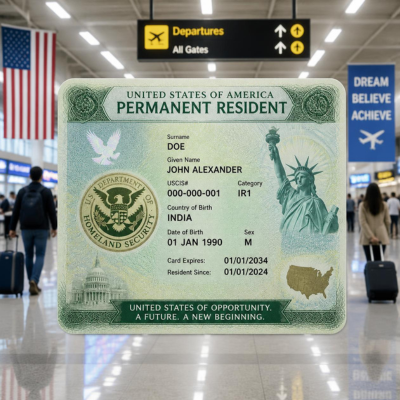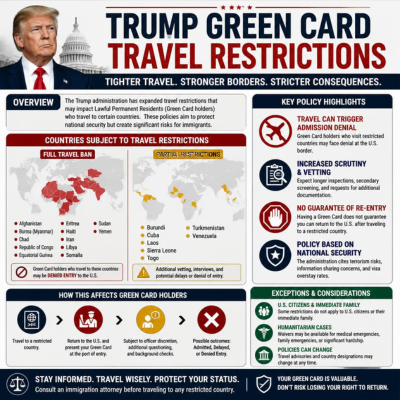

How Much Does a Green Card Cost? 2026

How Much Does a Green Card Cost?

There’s no single price tag for a green card. Ask ten different people how much theirs cost, and you’ll likely get ten different numbers, because so much depends on which category you’re applying under, whether you’re already in the U.S. or applying from abroad,

how many family members are included, and whether you hire an attorney. What most people actually want to know is a realistic range, plus a clear breakdown of where the money actually goes, and that’s exactly what this guide covers.

How Much Does a Green Card Cost?

The Short Answer

For most green card applicants in 2026, government filing fees alone typically fall somewhere between $1,500 and $3,500, depending on the category and whether you’re filing from inside the U.S. (adjustment of status) or from abroad (consular processing).

Once you add optional but commonly needed extras — a work permit application, a travel document, the required medical exam, and any attorney fees — a realistic all-in total for many applicants lands somewhere between $3,000 and $10,000, and employment-based cases using premium processing or requiring an attorney can run considerably higher, sometimes well past $15,000.

Why There’s No Single Price

Green cards are issued through several different legal pathways — family sponsorship, employment, humanitarian categories like asylum or refugee status, the diversity visa lottery, and a handful of smaller special categories. Each of these follows a different set of forms, and each form carries its own government filing fee. On top of that, every applicant has to choose between two very different processes:

Adjustment of status (AOS) is available if you’re already lawfully present in the U.S., typically on a temporary visa. It lets you become a permanent resident without leaving the country, but it generally comes with higher combined USCIS fees since you’re often filing several forms together.

Consular processing is for applicants living outside the U.S. It involves a visa interview at a U.S. embassy or consulate and generally comes with a somewhat lower total in USCIS fees, though it adds State Department fees of its own.

Because these two paths carry genuinely different costs, “how much is a green card” really has two different answers depending on where you’re starting from.

How Much Does a Green Card Cost?

Core USCIS Filing Fees in 2026

Here’s a breakdown of the primary forms involved and their current government fees. Keep in mind not every applicant files every form — which ones apply depends on your specific category and circumstances.

Form I-130, Petition for Alien Relative — around $675. This is filed by a U.S. citizen or permanent resident sponsor for a family-based case and establishes the qualifying relationship.

Form I-140, Immigrant Petition for Alien Worker — around $715. This is the employment-based equivalent of the I-130, typically filed by an employer sponsoring a foreign worker.

Form I-485, Application to Register Permanent Residence or Adjust Status — around $1,440 if filed by paper, or slightly less if filed online, for applicants 14 and older. This is the core green card application itself for anyone adjusting status inside the U.S., and as of recent fee changes, it now includes the biometrics fee that used to be billed separately.

USCIS Immigrant Fee — around $220 to $235. This applies to applicants who complete consular processing abroad and covers the cost of producing and mailing the physical green card once they arrive in the U.S.

Form I-131, Application for Travel Document — around $630. This is optional but commonly filed alongside an adjustment of status application, allowing travel outside the U.S. while the green card case is still pending.

Form I-765, Application for Employment Authorization — commonly cited in the $260 to $520 range depending on filing method. Also optional, this allows applicants adjusting status to legally work in the U.S. while their case is being processed.

Form I-693, Report of Medical Examination — this isn’t paid to USCIS at all. It’s paid directly to the civil surgeon or panel physician who conducts your required medical exam, and typically runs $200 to $650 depending on location and provider.

Visa Integrity Fee — a newer $250 fee introduced in October 2025, charged at the time an immigrant visa is issued for consular processing cases. It’s easy to overlook since it isn’t part of the upfront application fee.

Typical Total Costs by Category

Family-based green cards. Through consular processing, total government fees generally run around $1,300 to $1,500 or more. Through adjustment of status, combined fees for the core forms — I-130 and I-485 — run around $2,100, and can climb toward $2,500 to $3,500 once a work permit and travel document application are added.

Marriage-based green cards. These follow the same family-based fee structure, since a marriage green card is a specific type of family sponsorship. Filing just the I-130 and I-485 together runs about $2,115. Adding a work permit and travel document application brings the full package closer to $3,000.

Employment-based green cards. These tend to run higher, generally $1,500 or more through consular processing and $3,000 or more through adjustment of status, since they typically involve both an I-140 petition and the I-485 application, along with any related forms. Employers usually cover these costs when the sponsorship is employer-initiated, though self-sponsored categories put the full cost on the applicant.

How Much Does a Green Card Cost?

Costs Beyond Government Filing Fees

The government filing fees only tell part of the story. A few other costs come up often enough that they should be part of your budget from the start:

Medical exam. Required for every applicant, this typically costs $200 to $650 per person, paid directly to the examining physician rather than to USCIS.

Document translation. If any of your supporting documents — birth certificates, marriage certificates, court records — aren’t in English, certified translations are required and typically cost anywhere from a modest per-page fee up to several hundred dollars total, depending on the volume of documents.

Foreign credential evaluations. If your education was completed outside the U.S. and is relevant to your case, particularly for certain employment categories, a credential evaluation is often required and usually runs $100 to $400.

Attorney fees. This is where costs vary the most. Many applicants file without an attorney, particularly for straightforward family-based cases, and pay nothing beyond government fees. Others, especially for more complex employment-based cases or situations involving prior immigration issues, hire an attorney, with fees commonly ranging from $2,000 to $10,000 or more depending on the complexity of the case and whether it’s billed as a flat fee or hourly.

Family member multiplication. If you’re filing as a family unit, each spouse and each child generally needs their own I-485 or equivalent application and their own medical exam, which multiplies several of these costs directly. A family of four adjusting status together, for example, pays the I-485 fee and the medical exam cost four separate times, which is often the single biggest reason a family’s total ends up much higher than an individual applicant’s.

Realistic All-In Estimates

Pulling all of this together, here’s roughly what different applicants tend to pay in total, government fees plus common additional costs:

  • A single family-based applicant filing without an attorney: roughly $2,500 to $4,000
  • A single employment-based applicant, including some professional help: roughly $3,000 to $6,000 in government fees, plus $3,000 to $10,000 in attorney fees, landing many cases between $6,000 and $16,000 overall
  • A married couple applying together, both inside the U.S.: often $5,000 to $10,000 combined, depending on whether a work permit and travel document are filed for both, and whether an attorney is involved
  • A family of four adjusting status together: frequently $10,000 or more once every family member’s I-485 fee and medical exam are factored in

Fee Waivers and Reduced Fees

USCIS does offer fee waivers for certain applicants who can demonstrate financial hardship, generally by showing household income at or below 150% of the federal poverty level, or by showing receipt of certain means-tested public benefits. Not every form qualifies for a waiver, and eligibility rules can be strict, so it’s worth checking current USCIS guidance directly if cost is a genuine barrier to filing.

Practical Tips for Budgeting Your Green Card Costs

  • Use the official USCIS fee calculator before filing anything, since fees are updated periodically and an outdated number can lead to a rejected application.
  • Decide early whether you’ll need a work permit or travel document while your case is pending, since these optional forms add real cost but can be genuinely necessary depending on your situation.
  • Budget for the medical exam and any translations separately, since these aren’t paid to USCIS and are easy to forget when estimating your total.
  • Get attorney fee quotes in writing before committing, and ask whether the quote is a flat fee for the full case or billed hourly, since the difference can significantly affect your final cost.
  • If you’re filing as a family, multiply the per-person costs carefully, since this is the single biggest reason families underestimate their total budget.
  • Check whether you qualify for a fee waiver if cost is a serious concern, rather than assuming you don’t qualify without checking current income thresholds.
  • Pay close attention to which fee applies to your specific form version, since paper and online filing sometimes carry slightly different costs.

The Bottom Line

There’s no single number that answers “how much does a green card cost,” but there is a reasonably predictable range once you know your category and process. Government filing fees alone generally run $1,500 to $3,500 for most applicants, and a realistic all-in total — factoring in medical exams, optional work and travel permits,

and any legal help — typically lands between $3,000 and $10,000 for individual and family-based cases, with employment-based cases sometimes running higher. Understanding exactly which fees apply to your specific situation before you file is the best way to avoid an unpleasant surprise partway through the process.

Frequently Asked Questions

What is the cheapest way to get a green card?

Family-based green cards, particularly through consular processing rather than adjustment of status, tend to carry the lowest total government fees, generally starting around $1,300 to $1,500. Filing without an attorney, when your case is straightforward, also keeps costs down significantly.

Does a green card cost more if I’m already in the U.S.?

Often, yes. Adjustment of status, used by applicants already in the U.S., generally involves higher combined USCIS fees than consular processing, partly because applicants often file additional forms, such as a work permit and travel document application, alongside the core I-485.

Is the medical exam included in the green card filing fee?

No. The required medical exam (Form I-693) is paid separately, directly to the civil surgeon or panel physician who conducts it, and typically costs $200 to $650 depending on location and provider.

Do I have to pay for a green card for each family member?

Yes. Each spouse and child included in a family-based case generally needs their own I-485 application and their own medical exam, meaning costs multiply with each additional family member rather than being covered under one combined fee.

Can I get a fee waiver for a green card application?

Possibly. USCIS offers fee waivers for certain applicants who can demonstrate financial hardship, typically based on household income at or below 150% of the federal poverty level or receipt of specific public benefits. Not all forms qualify, so eligibility should be checked directly with current USCIS guidance.

How much do immigration attorneys charge for green card cases?

Attorney fees vary widely based on case complexity, ranging anywhere from around $2,000 for a straightforward case to $10,000 or more for complex employment-based or legally complicated situations. Many attorneys offer flat-fee pricing for standard green card cases rather than hourly billing.

Are green card fees the same for family-based and employment-based applications?

No. Employment-based applications generally involve different forms, such as the I-140 petition instead of the I-130, and often carry a higher total cost, particularly through adjustment of status, compared to most family-based cases.


1 thought on “How Much Does a Green Card Cost? 2026”

  1. Alright, so casinoguru is my go-to for finding honest casino reviews. They break everything down, good and bad, which I appreciate. Helps me avoid scams. Check them out before you spend your money

    Reply

Leave a Comment

Green Card Travel to Europe: What You Actually Need to Know in 2026

Green Card Travel to Europe

Green Card Travel to Europe

Planning a European vacation and wondering how your U.S. green card factors into entry requirements? Here’s the thing that trips up a lot of permanent residents: your green card doesn’t actually determine whether you need a visa to enter Europe. It’s your passport nationality that matters, not your U.S. residency status. This one detail changes everything about how you should plan your trip, and it’s the source of most of the confusion out there.

Here’s a complete, current breakdown of how green card holders should think about travel to Europe, including the new ETIAS system that’s finally on its way in 2026.

A U.S. green card does not grant visa-free access to Europe on its own. What determines whether you need a visa is the passport you’re traveling on. If you hold a passport from a visa-exempt country — including the U.S. itself — you can generally visit the Schengen Area for up to 90 days within any rolling 180-day period without a visa.

If your passport is from a country that requires a visa, having a U.S. green card doesn’t change that requirement; you’ll still need to apply for a Schengen visa based on your nationality, though you can typically do this from a U.S.-based visa application center rather than returning to your home country. Later in 2026, both groups will also need to factor in ETIAS, a new pre-travel authorization system, and the EES digital border-registration system, which is already operational.

Green Card Travel to Europe

Why Your Green Card Doesn’t Change the Visa Requirement

It’s an easy assumption to make: you live in the U.S. permanently, so surely that carries some weight at a European border. It doesn’t, at least not directly. European immigration authorities determine visa requirements based on the passport you present at the border, not on where you currently reside or hold residency status. A U.S. green card demonstrates your right to live and work in the United States — it has no bearing on your relationship with the European Union.

This means the outcome depends entirely on your citizenship:

If you’re a U.S. citizen with a U.S. passport and also hold a green card (which describes most green card holders, since a green card is generally held by non-citizens), your U.S. passport already grants visa-free entry to the Schengen Area for short stays. Your green card is essentially irrelevant to this specific question, since your passport already covers you.

If you hold a green card but travel on a passport from another visa-exempt country — say, a Canadian or Mexican passport — you can still enter Europe visa-free, because the exemption follows your passport’s nationality, not your U.S. residency.

If you hold a green card but travel on a passport from a visa-required country — for example, a Chinese, Indian, or Nigerian passport — you’ll still need to apply for a Schengen visa before your trip, regardless of your U.S. green card. The one meaningful convenience here is that green card holders can typically apply for their Schengen visa through a U.S.-based visa application center rather than needing to travel back to their home country to do so.

The Standard 90/180 Rule for Visa-Exempt Travelers

For travelers whose passport nationality qualifies for visa-free entry, the Schengen Area operates under what’s commonly called the 90/180 rule: you can spend up to 90 days in the Schengen zone within any rolling 180-day period. This limit applies across the entire Schengen Area as a combined total, not separately per country, so spending 45 days in France and another 45 in Italy on the same trip still counts as using your full 90 days.

If you want to stay longer than 90 days, for any reason — an extended vacation, remote work, study, or moving to be with family — you’ll generally need to apply for the appropriate national long-stay visa (often called a Type D visa) through the consulate of the specific country where you’ll be spending the most time, before you travel.

ETIAS: The New Requirement Arriving in Late 2026

If you’ve researched this topic before, you may have seen references to ETIAS, the European Travel Information and Authorisation System. This has been delayed multiple times over the past several years, but current official guidance points to a launch in the last quarter of 2026, with a transition period extending into early 2027.

Here’s what to know about it:

It’s not a visa. ETIAS is a pre-travel screening system, conceptually similar to the U.S. ESTA program, rather than a traditional visa with a lengthy application process.

It applies based on passport nationality, just like the visa-exemption rules. If your passport already requires a Schengen visa, ETIAS doesn’t apply to you — the visa requirement supersedes it. ETIAS is specifically for travelers from visa-exempt countries, including the U.S., who will now need this additional online authorization before their trip, even though they still won’t need a traditional visa.

The application is done online and is typically fast. The current fee is around €20 (waived for travelers under 18 and over 70), and most approvals come through within minutes, though officials recommend applying at least several days before departure in case additional review is needed.

It’s valid for three years, or until your passport expires, whichever comes first, and covers multiple entries during that period, so you won’t need to reapply for every trip.

It covers short-term visits under 90 days — tourism, business meetings, transit, and short-term study or medical treatment. It doesn’t authorize working in Europe or staying longer than 90 days; those situations still require a proper visa or long-stay permit.

For green card holders specifically: if you travel on a passport that requires a Schengen visa, ETIAS won’t apply to you at all, since your existing visa covers your entry. If you travel on a visa-exempt passport, you’ll need to complete ETIAS just like any other traveler from that country, regardless of your U.S. green card status.

Green Card Travel to Europe

The EES System: Already Operational

Separate from ETIAS, the Entry/Exit System (EES) is a digital border-registration system that records biometric data — fingerprints and a facial image — for non-EU short-stay travelers at Schengen external borders. Unlike ETIAS, EES has already been rolled out and became fully operational across the Schengen Area in 2026. This system replaces manual passport stamping with an electronic record of your entry and exit dates, which also makes it easier for border authorities to enforce the 90/180 day rule accurately.

If this is your first trip to Europe since EES launched, it’s worth budgeting some extra time at your first entry point, since registering biometric data for the first time can add to processing at the border.

What About Green Card Holders Traveling With Non-U.S. Family Members?

This is a common point of confusion for mixed-nationality families. If you’re a green card holder traveling with a spouse or child who holds a passport from a different country than you, each family member’s visa requirement is assessed individually, based on their own passport, not based on your status or anyone else’s in the group. A U.S. citizen spouse doesn’t extend visa-free privileges to a green card holder traveling on a visa-required passport, and vice versa. Every traveler in your party needs to check their own specific requirements based on their own nationality.

Passport Validity Requirements

Regardless of whether you need a visa, ETIAS, or neither, there’s a passport validity rule that applies broadly across the Schengen Area: your passport generally needs to remain valid for at least three months beyond your planned departure date from the Schengen zone. It’s worth double-checking your passport’s expiration date well before booking international flights, since a passport that’s too close to expiring can cause real problems at check-in or at the border, even if your visa or ETIAS status is otherwise in order.

Returning to the U.S. After Your Trip

One more piece worth keeping in mind: as a green card holder, your ability to reenter the U.S. after a European trip depends on standard green card travel rules, separate entirely from European entry requirements. Short trips of a few weeks generally don’t raise any concerns, but if your travel plans in Europe might extend into a longer stay, it’s worth reviewing how extended absences from the U.S. can affect your permanent resident status, since those considerations exist independently of anything European immigration authorities require.

Practical Tips for Green Card Holders Planning European Travel

  • Check your passport’s nationality-based requirements first, since this — not your green card — determines whether you need a Schengen visa.
  • Confirm your passport has at least three months of validity remaining beyond your planned departure from Europe.
  • If you need a Schengen visa, apply through a U.S.-based visa application center, which is generally more convenient than applying from your home country.
  • Watch for the official ETIAS launch date, expected in the last quarter of 2026, and apply through the official EU portal only — a number of unofficial websites have already been reported charging fees for a system that isn’t operational yet.
  • Budget extra time at your first border crossing now that the EES biometric registration system is active.
  • Check each family member’s requirements individually if you’re traveling with people who hold different passports than you.
  • Plan around the 90/180 day rule carefully if you’re combining visits to multiple Schengen countries on one trip, since the limit applies to the zone as a whole.
  • Green Card Travel to Europe

The Bottom Line

A U.S. green card, on its own, doesn’t grant or restrict your ability to enter Europe — that comes down to your passport’s nationality. Visa-exempt passport holders, including U.S. citizens who also hold green cards, can generally still visit the Schengen Area for up to 90 days within a 180-day period without a visa, though they’ll soon need to complete the ETIAS online authorization once it launches later in 2026.

Green card holders whose passports require a visa still need one, green card or not, though applying through a U.S. visa center offers some convenience. Understanding which category you actually fall into, based on your passport rather than your residency, is the key to planning a smooth trip.

Frequently Asked Questions

Does a US green card allow visa-free travel to Europe?

No. Visa requirements for Europe are based on your passport’s nationality, not your U.S. green card status. If your passport is from a visa-exempt country, you can travel visa-free for short stays; if it’s from a visa-required country, you’ll still need a Schengen visa despite holding a green card.

Can green card holders apply for a Schengen visa from the United States?

Yes. Green card holders who need a Schengen visa based on their passport nationality can generally apply through a U.S.-based visa application center rather than needing to return to their home country to apply.

What is ETIAS and do green card holders need it?

ETIAS is a new online travel authorization for visa-exempt travelers to Europe, expected to launch in the last quarter of 2026. Green card holders need it only if they travel on a passport from a visa-exempt country; those traveling on a passport requiring a Schengen visa don’t need ETIAS, since the visa already covers their entry.

How long can a green card holder stay in Europe without a visa?

If traveling on a visa-exempt passport, up to 90 days within any rolling 180-day period across the entire Schengen Area combined. This limit is based on passport nationality, not U.S. residency status.

Do green card holders need a visa to visit the UK?

The UK is separate from the Schengen Area and has its own entry system, the UK Electronic Travel Authorisation (ETA), which applies based on passport nationality, similar to the Schengen system. A U.S. green card doesn’t change UK entry requirements either.

Does traveling with a US citizen spouse change visa requirements for a green card holder?

No. Each traveler’s visa requirement is assessed individually based on their own passport nationality. A U.S. citizen spouse’s visa-free status does not extend to a green card holder traveling on a passport that requires a visa.

What is the EES system and does it affect green card holders traveling to Europe?

The Entry/Exit System is a digital border-registration system, now fully operational, that records biometric data for non-EU short-stay travelers entering the Schengen Area. It applies to all eligible travelers regardless of U.S. residency status, based on their passport and visa category.

2 thoughts on “Green Card Travel to Europe: What You Actually Need to Know in 2026”

  1. [221547]supplies professional anti-violence equipments and solutions for the whole world with strong and perfect production capacity.

    Reply
  2. I used to be hesitant about trying new platforms but the reviews and my own first session convinced me to stay. The graphics are sharp, loading times are barely noticeable, and the withdrawal process feels completely straightforward. You can tell they prioritize player comfort over everything else. It is a breath of fresh air in this space.

    Reply

Leave a Comment

Green Card Travel Permit: A Complete Guide to Reentry Permits 2026

Green Card Travel Permit

Green Card Travel Permit

If you’re a green card holder planning an extended trip abroad — for work, to care for a family member, for school, or any other reason that might keep you outside the U.S. for a while — you’ve probably come across the term “green card travel permit” in your research. What most people are actually referring to here is the reentry permit, a specific travel document issued by USCIS that protects your permanent resident status during longer absences from the country.

This guide walks through exactly what a reentry permit does, when you actually need one, how the application process works, and the common mistakes that trip people up.

A green card travel permit, more formally known as a reentry permit, is a document issued by USCIS on Form I-131 that allows lawful permanent residents and conditional permanent residents to stay outside the U.S. for up to two years without being presumed to have abandoned their permanent resident status.

It’s generally required if you plan to be abroad for a year or longer, and it’s often recommended for trips between six months and a year, even though it’s not strictly mandatory in that middle range.

Importantly, you must apply for it while physically present in the United States — it cannot be requested from abroad — and while it protects you from an automatic abandonment finding based purely on how long you were gone, it does not guarantee entry, since CBP officers still make that determination at the port of entry.

Green Card Travel Permit

What a Reentry Permit Actually Does

Your green card (Form I-551) works fine as a travel document for shorter trips, but it starts to lose its practical effectiveness the longer you’re away. If you’re outside the U.S. for a year or more without a reentry permit, your green card is generally no longer considered valid for reentry on its own, and you can be presumed to have abandoned your permanent resident status.

A valid reentry permit changes this. If you hold one, USCIS and CBP will not consider you to have abandoned your status solely because of how long you were outside the country, as long as you return within the permit’s validity period. It also lets you apply for admission to the U.S. directly, without needing to first obtain a Returning Resident (SB-1) visa from a U.S. embassy or consulate abroad, which is a considerably more involved process.

It’s worth being clear about what the permit doesn’t do, though. It doesn’t guarantee entry you’re still subject to standard immigration inspection at the port of entry, and a CBP officer can still ask questions about your ties to the U.S. and your intent to maintain residency. It also doesn’t pause or preserve the continuous residence clock required for naturalization; an absence of a year or more will generally still break continuous residence for citizenship purposes, even with a valid reentry permit in hand, which is a common point of confusion.

When You Actually Need One

The general guidance breaks down fairly cleanly by trip length:

Under six months. A reentry permit generally isn’t necessary. Your green card should be sufficient for reentry, though it’s still smart to maintain clear, demonstrable ties to the U.S. — a home, a job, family connections, ongoing tax filings — in case you’re questioned at the border.

Six months to one year. Not strictly required, but often recommended, especially if you anticipate any scrutiny about your intent to maintain residency, or if you have a pattern of frequent or lengthy trips abroad that could raise questions cumulatively.

One year or more. This is where a reentry permit becomes essential. Without one, an absence of a year or more puts your green card’s validity for reentry seriously in question, and you risk needing to go through the SB-1 returning resident visa process instead, which requires an interview at a U.S. embassy or consulate and can take considerable time to arrange.

More than two years, or no permit obtained before leaving. At this point, a reentry permit generally isn’t an option anymore. You’ll need to apply for an SB-1 Returning Resident visa instead, which requires demonstrating that your extended stay abroad was caused by circumstances beyond your control.

Green Card Travel Permit

Eligibility Requirements

To apply for a reentry permit, you need to meet a few core requirements:

  • You must hold a valid green card, whether as a permanent resident or conditional permanent resident
  • You must be physically present in the United States at the time you file Form I-131 — this cannot be filed from abroad
  • You must complete a biometrics appointment (fingerprints and photo), which also must take place while you’re in the U.S., unless USCIS indicates it can reuse biometrics already on file
  • You need to be able to show a genuine intent to maintain your U.S. permanent residency, rather than treating the trip as a step toward relocating elsewhere permanently

Both standard permanent residents and conditional permanent residents (those on a two-year, marriage-based green card) are eligible to apply, though conditional residents face a shorter permit validity window, explained below.

How Long Is a Reentry Permit Valid?

For standard permanent residents, a reentry permit is generally valid for two years from the date it’s issued. For conditional permanent residents, the permit is valid for two years from issuance, or until the date you’re required to file Form I-751 to remove the conditions on your residency, whichever comes first. This shorter effective window for conditional residents is easy to overlook when planning an extended trip, so it’s worth factoring in carefully if this applies to you.

How to Apply: Step by Step

File Form I-131. This is the same multi-purpose application used for several different travel documents, so it’s important to check the correct box under the reentry permit section specifically. Selecting the wrong document type can significantly delay processing.

Pay the filing fee. As of 2026, the total cost is $660, made up of a $575 application fee plus an $85 biometrics fee. Payment needs to be made in U.S. dollars from a U.S. bank account; USCIS does not accept international wire transfers or foreign currency checks.

Submit supporting evidence. This typically includes a copy of your green card, evidence explaining the purpose of your extended travel, and documentation supporting your ongoing ties to the U.S., such as proof of employment, property, or family connections.

Attend your biometrics appointment. After filing, USCIS will schedule a biometrics appointment at a local Application Support Center. This must happen while you’re still in the United States.

Wait for a decision. Once you’ve completed your biometrics appointment, and assuming your application is otherwise complete, you’re generally permitted to travel abroad while your application remains pending. If approved, USCIS will mail the physical reentry permit to a U.S. address, though you can designate someone to receive it on your behalf if you’ve already departed. In some cases, you can request that the permit be sent to a U.S. embassy, consulate, or USCIS office abroad for pickup instead.

Traveling While Your Application Is Pending

One detail that surprises a lot of applicants: you don’t have to wait in the U.S. until your reentry permit is approved before you leave. As long as you’ve filed Form I-131 and completed your biometrics appointment while physically present in the country, you can generally travel abroad while the application is still processing.

If you need to return to the U.S. before the physical permit has arrived, carry your valid green card, your passport, and any USCIS receipt or biometrics notices you’ve received. These documents don’t guarantee admission on their own, but they can help explain your situation to a CBP officer at the port of entry.

How Long Does Processing Take?

Processing times for reentry permits have varied and can run anywhere from several months to well over a year, depending on current USCIS workload and where your application is being processed. Given this range, it’s strongly advisable to apply well in advance of your planned departure — commonly recommended timelines suggest starting the process at least 60 to 90 days before you leave, though given recent processing patterns, earlier is generally better if your travel plans allow for it.

What Happens If You Don’t Get One in Time

If you leave the U.S. for an extended trip without a reentry permit and end up abroad for a year or more, you’re not automatically barred from returning, but the process becomes considerably more complicated. You’ll typically need to apply for a Returning Resident (SB-1) visa at the nearest U.S. embassy or consulate, which requires demonstrating that your prolonged absence was due to circumstances genuinely beyond your control, along with a formal interview. This process takes real advance planning — embassies generally recommend starting the process at least three months before you intend to travel — and approval isn’t guaranteed the way returning with a valid reentry permit generally is.

Green Card Travel Permit

Practical Tips

  • Apply well before your departure date, ideally several months ahead, given how unpredictable current processing times can be.
  • Be honest and specific about your reason for extended travel on the application, since vague or inconsistent explanations can raise red flags.
  • Gather strong documentation of your U.S. ties before you file, including proof of employment, property ownership, tax filings, or family connections.
  • Track your permit’s expiration date carefully, especially if you’re a conditional resident, since your permit’s validity may be shorter than the standard two years.
  • Remember that a reentry permit doesn’t preserve your naturalization timeline. If you’re working toward citizenship, an absence of a year or more can still disrupt your continuous residence requirement even with a valid permit.
  • Keep both your green card and reentry permit with you while traveling, along with your foreign passport, since some countries require a valid passport for entry even if the U.S. itself doesn’t.
  • If your reentry permit is lost, stolen, or destroyed while you’re abroad, you may need to file Form I-131A for carrier documentation to be allowed to board a flight back to the U.S.

The Bottom Line

A green card travel permit, or reentry permit, is one of the most important tools available to lawful permanent residents planning extended time abroad. It won’t guarantee your entry back into the U.S., and it doesn’t stop the clock on naturalization requirements, but it does protect you from having your absence alone treated as abandonment of your status, and it saves you from the more complicated SB-1 returning resident visa process.

If you know a trip abroad is likely to stretch past six months, and especially past a full year, applying for a reentry permit well ahead of time is one of the simplest ways to protect your green card status while you’re away.

Frequently Asked Questions

What is a green card travel permit called officially?

It’s officially known as a reentry permit, applied for using Form I-131, Application for Travel Document. It’s a different document from your green card itself, though the two work together to protect your ability to reenter the U.S. after extended travel.

Do I need a reentry permit for a trip shorter than six months?

Generally, no. For trips under six months, your valid green card is typically sufficient for reentry, though it’s still wise to maintain clear evidence of your ongoing ties to the United States.

Can I apply for a reentry permit from outside the United States?

No. You must be physically present in the U.S. when you file Form I-131 and when you complete your required biometrics appointment. This cannot be done from abroad.

How much does a reentry permit cost in 2026?

The current filing fee is $660 total, consisting of a $575 application fee and an $85 biometrics fee, payable in U.S. dollars from a U.S. bank account.

How long is a reentry permit valid?

For standard permanent residents, it’s valid for two years from the date of issuance. For conditional permanent residents, it’s valid for two years or until the date they must file Form I-751 to remove conditions on their residency, whichever comes first.

Can I leave the U.S. while my reentry permit application is still pending?

Yes, generally. As long as you’ve filed the application and completed your biometrics appointment while in the U.S., you can typically travel abroad while the application processes, carrying your green card, passport, and USCIS receipt notices in the meantime.

What happens if I stay abroad longer than two years, even with a reentry permit?

If you remain outside the U.S. longer than your reentry permit’s validity period, the permit will have expired, and you’ll generally need to apply for a Returning Resident (SB-1) visa at a U.S. embassy or consulate instead, which requires demonstrating that your extended absence was due to circumstances beyond your control.

Leave a Comment

Trump Green Card Travel Restrictions: What Green Card Holders Need to Know in 2026

Trump Green Card Travel Restrictions

Trump Green Card Travel Restrictions

If you’re a green card holder trying to figure out whether it’s safe to travel internationally right now, you’re not alone, and the confusion is understandable. Immigration policy has shifted substantially since early 2025, with an expanded travel ban, new biometric screening requirements, and a Supreme Court ruling that gave border officers considerably more discretion over returning permanent residents.

The core legal fact hasn’t changed — green card holders are still technically exempt from the travel ban itself — but “exempt” and “unaffected” have turned out to be two very different things in practice. Here’s a clear, current breakdown of where things actually stand for green card holders heading into international travel in 2026.

Lawful permanent residents remain formally exempt from the travel ban proclamations issued under the current administration, which now cover nationals of 39 countries in some form as of January 1, 2026. This means a valid green card holder generally cannot be denied entry to the U.S. purely because of their country of origin.

However, green card holders now face substantially more scrutiny at the border than they did in past years, including mandatory biometric screening, closer review of criminal history and past visa violations, and in some documented cases, pressure to sign away their status voluntarily. The safest approach for 2026 depends heavily on your individual circumstances — particularly your country of origin, any past criminal record, and how long you plan to be outside the U.S.

Trump Green Card Travel Restrictions

The Expanded Travel Ban and What It Actually Means for Green Card Holders

On December 16, 2025, the administration issued a revised and significantly expanded travel ban proclamation, effective January 1, 2026, that fully or partially restricts entry for nationals of 39 countries, along with anyone traveling on Palestinian Authority-issued travel documents.

This built on an earlier June 2025 proclamation that had targeted 19 countries, adding countries including Burkina Faso, Mali, Niger, South Sudan, Syria, Laos, and Sierra Leone, among others, while also expanding partial restrictions to 15 additional nations.

The proclamation is explicit that lawful permanent residents are exempt from these restrictions. If you already hold a valid green card, the travel ban itself does not bar you from re-entering the United States, regardless of which country you’re a national of. This exemption also generally extends to dual nationals traveling on a passport from a country not on the restricted list.

That said, the exemption applies to the ban itself, not to the broader immigration enforcement environment green card holders now find themselves navigating. Multiple sources have reported that green card holders from the originally restricted countries are facing intensive review of their existing status, and that immigrant visa processing has been paused entirely for people from a much larger list of 75 countries, which affects family members still trying to join green card holders already in the U.S.

Heightened Scrutiny: What’s Actually Changed at the Border

This is where the practical impact on green card holders has grown the most. Several enforcement changes now apply broadly to all green card holders, not just those from restricted countries:

Mandatory biometric screening. As of late December 2025, Customs and Border Protection can now collect facial recognition data from all noncitizens entering and exiting the U.S., including green card holders, at airports, land crossings, and seaports. This is a broader requirement than what existed previously, and it applies regardless of destination or country of origin.

Criminal history review. Immigration officers are now directed to review the criminal records of returning green card holders more closely than before, and reports indicate this includes flagging even minor past issues, such as an old marijuana-related charge, a dismissed case, or an arrest that never led to a conviction. A landmark Supreme Court ruling in June 2026 gave CBP the authority to treat any returning green card holder as “seeking admission” without needing a prior legal exception to do so, which significantly broadens the situations in which a green card holder’s status can be questioned upon return.

Social media and political activity vetting. Advocacy organizations have reported that the administration has directed scrutiny not just toward criminal history but toward green card holders’ social media activity and participation in protests or political expression the administration considers objectionable, characterizing certain activity as a potential national security concern.

Pressure to sign Form I-407. There have been documented reports of green card holders being pressured by border officers to voluntarily sign Form I-407, which formally abandons permanent resident status. This is not something a green card holder is required to sign, and legal advocates strongly recommend refusing to sign anything at the border without first speaking to an immigration attorney, and requesting a supervisor if pressure continues.

Trump Green Card Travel Restrictions

Who Faces the Highest Risk When Traveling

Based on current guidance from immigration attorneys and advocacy groups, a few categories of green card holders face meaningfully elevated risk when traveling internationally right now:

Anyone with a past criminal record, even a minor or resolved one. This includes convictions, but also pending charges, dismissed cases, or old arrests that never resulted in a conviction. Because criminal court outcomes and immigration consequences are evaluated under different legal standards, a plea deal or reduced charge that seemed fully resolved years ago doesn’t necessarily protect someone at the border anymore.

Green card holders from originally restricted countries. While the travel ban doesn’t apply to them directly, reports indicate that USCIS has been reviewing the immigration status of green card holders from the countries originally covered by the June 2025 proclamation, which raises the stakes of any international travel for this group specifically.

Anyone who has spent more than 180 continuous days outside the U.S. Extended absences have always carried some risk of being questioned about intent to maintain residency, but this scrutiny has intensified considerably under the current enforcement posture.

People with any pending immigration paperwork. Green card holders in the process of removing conditions on a marriage-based card, renewing documents, or with any other application pending at USCIS should be especially cautious, given that processing timelines have lengthened and travel during a pending case can complicate matters further.

Individuals who have engaged in public political expression the administration has flagged as objectionable. Advocacy groups have specifically warned that participation in protests or certain public statements could trigger additional scrutiny, separate from any criminal or immigration violation.

What About Green Card Applicants Still in Process?

Beyond travel restrictions for existing green card holders, the administration announced a major policy shift in May 2026 that changes how people currently in the U.S. can even become green card holders in the first place. Under this new guidance, most people applying for a green card while already in the U.S. on a temporary visa are now expected to return to their home country and complete the process through consular processing abroad, rather than adjusting their status without leaving the country, which had been standard practice for decades.

This creates a serious complication for applicants from countries currently subject to travel restrictions or paused visa processing, since returning home to complete an application could mean being unable to come back at all. If you’re in this situation, it’s worth discussing your specific case with an immigration attorney before making any decisions about travel or applying for adjustment of status.

Trump Green Card Travel Restrictions

Practical Steps for Green Card Holders Planning to Travel

Given the current environment, immigration attorneys and advocacy organizations are generally recommending a more cautious approach than in past years:

  • Consult an immigration attorney before traveling if you have any criminal history, no matter how old, minor, or seemingly resolved. This is now considered essential rather than optional for this group.
  • Carry thorough documentation of your U.S. ties, including proof of employment, a lease or mortgage, tax filings, and family connections, in case you’re questioned about your intent to maintain residency.
  • Keep your green card, and any relevant USCIS receipt notices, easily accessible when traveling, along with a valid passport from your country of citizenship.
  • Never sign Form I-407 at the border without speaking to an attorney first. You have the right to decline and to request a supervisor if you feel pressured.
  • Be mindful of what’s visible on your social media accounts, given reports that political expression and activism are being factored into enforcement decisions.
  • Avoid extended absences of six months or more when possible, and apply for a reentry permit in advance if a longer trip is unavoidable.
  • Check current country-specific restrictions before booking travel, since the list of affected countries has changed multiple times and could change again.
  • Keep your attorney’s contact information on hand while traveling, in case a situation arises at the port of entry that requires immediate legal guidance.

The Bottom Line

Green card holders remain legally exempt from the travel ban itself, and that fundamental protection hasn’t changed. What has changed substantially is the enforcement environment surrounding that exemption — expanded biometric screening, closer scrutiny of criminal history and past visa violations, reported monitoring of political activity, and a Supreme Court ruling that gives border officers considerably more room to question returning residents than in previous years.

For most green card holders with no criminal history, no pending immigration issues, and a straightforward travel itinerary, international trips generally continue without major incident. But given how quickly this landscape has shifted through 2025 and 2026, and how much individual risk can vary,

checking in with an immigration attorney before travel — especially for anyone with a criminal record, pending paperwork, or ties to a restricted country — is no longer just a precaution, it’s become standard advice from the legal community.

Frequently Asked Questions

Are green card holders affected by the current travel ban?

No, not directly. Lawful permanent residents are explicitly exempt from the travel ban proclamations, including the expanded version effective January 1, 2026, which covers 39 countries. A valid green card holder cannot be denied entry solely based on their country of origin under this policy.

Can a green card holder be detained when returning to the U.S.?

Yes, in certain circumstances. Reports indicate that green card holders, particularly those with any past criminal history, have been stopped, questioned, and in some cases detained upon return, following a 2026 Supreme Court ruling that expanded CBP’s authority to treat returning residents as seeking admission.

Should I sign Form I-407 if a border officer asks me to?

No, not without speaking to an immigration attorney first. Form I-407 is a voluntary abandonment of permanent resident status, and signing it can permanently end your green card. You have the right to decline and to request a supervisor if you feel pressured.

Does having an old, dismissed criminal charge put me at risk when traveling?

It can. Immigration consequences are evaluated under different standards than criminal court outcomes, meaning even a dismissed case, an old arrest without conviction, or a reduced charge from years ago may no longer offer the protection it once did. Consulting an attorney before traveling is strongly recommended if this applies to you.

Do green card holders now face biometric screening when traveling?

Yes. As of late December 2025, Customs and Border Protection can collect facial recognition data from all noncitizens, including green card holders, at every entry and exit point, including airports, land crossings, and seaports.

Can I still adjust my status to a green card while staying in the U.S.?

In most cases, no, as of a May 2026 policy change. People currently on temporary visas seeking a green card are now generally required to return to their home country and complete the process through consular processing abroad, rather than adjusting status without leaving the U.S.

What should I do before traveling if I’m a green card holder from a restricted country?

Speak with an immigration attorney before booking any international travel. While the travel ban doesn’t apply to you directly as a green card holder, reports indicate that USCIS is reviewing the status of green card holders from originally restricted countries, which raises the stakes of any trip abroad.

Leave a Comment

Amex Green Card Travel Benefits: A Full Breakdown for 2026

Amex Green Card Travel Benefits

Amex Green Card Travel Benefits

If you spend a good chunk of your money on flights, hotels, transit, and eating out, but you’re not quite ready to pay $325 or $695 a year for the Gold or Platinum Card, the Amex Green Card sits in a genuinely useful middle ground.

It’s been part of American Express’s lineup since 1969, long before Gold or Platinum existed, and it’s built specifically around how everyday travelers actually spend money rather than chasing the kind of luxury perks that only make sense for someone flying first class every month.

Here’s a practical, cardholder-focused look at what the Amex Green Card’s travel benefits actually cover, how much they’re realistically worth, and who gets the most out of carrying it.

Amex Green Card Travel Benefits

Quick Overview: What You’re Actually Getting

For a $150 annual fee, the Amex Green Card bundles together a strong points-earning rate on travel-related spending, a credit that can fully cover a CLEAR Plus membership, a handful of built-in travel protections, and no foreign transaction fees. It’s not a card built around airport lounges or hotel status upgrades — it’s built around rewarding the spending categories most travelers already have, without demanding a premium-tier commitment.

One thing worth flagging right away: American Express has stopped accepting new applications for the Green Card, and starting August 20, 2026, it’s being rebranded as the American Express Classic Green Card. Current cardholders keep all their existing benefits under the new name, so if you already carry this card, nothing changes for you functionally.

Where the Points Actually Add Up

The card earns 3 Membership Rewards points per dollar in three categories that cover an unusually wide range of real-world spending:

Travel purchases, which isn’t limited to just flights and hotels booked through Amex. It extends to tours, campgrounds, car rentals, cruises, and vacation rentals, whether booked directly with the provider or through a third party.

Transit purchases, an unusually broad category that includes trains, taxis, rideshare apps like Uber and Lyft, ferries, tolls, parking, buses, and subway fares. Very few travel cards bother rewarding this category this generously, which makes the Green Card particularly strong for people who live in or regularly visit cities with heavy public transit use.

Dining at restaurants worldwide, including takeout and delivery orders within the U.S.

Everything outside these three categories earns a flat 1 point per dollar. The real strength here isn’t the multiplier itself — plenty of cards offer 3x somewhere — it’s how broadly Amex defines “travel” and “transit,” which means you don’t have to jump through booking-portal hoops to earn the bonus rate.

The CLEAR Plus Credit: The Card’s Biggest Single Perk

If there’s one benefit that tends to make or break the value equation on this card, it’s the annual CLEAR Plus credit, currently worth up to $209 per calendar year. CLEAR is the biometric identity verification service that lets members skip ahead in security lines at a growing list of participating U.S. airports by scanning their eyes or fingerprints instead of waiting in the standard line.

A standalone CLEAR Plus membership runs close to $199 a year, so this credit essentially pays for the entire service and puts you slightly ahead, even before counting a single point earned elsewhere on the card. For travelers who fly regularly out of CLEAR-enabled airports, this one benefit alone can make the $150 annual fee worth paying. You’re also not required to apply this credit to your own membership only — it can be used toward a membership for another person if that makes more sense for your household.

Amex Green Card Travel Benefits

Built-In Travel Protections

Beyond points and the CLEAR credit, the Green Card includes a set of travel protections that don’t get talked about as often but genuinely matter when travel plans go sideways:

Baggage insurance. If checked or carry-on luggage is lost, damaged, or stolen while you’re traveling on a plane, train, ship, or bus, this benefit can help cover the loss, as long as the entire fare for that trip was charged to your Green Card. There are coverage limits and specific exclusions, so it’s worth reading the fine print in the Guide to Benefits if you plan to rely on it.

Trip delay insurance. When your round-trip travel — booked entirely on the card — is delayed by more than 12 hours for a covered reason, this benefit can help reimburse costs like an unplanned hotel stay or meals that come with the delay.

To actually use either of these protections, you generally need to report the incident to American Express fairly quickly, often within 30 days or as soon as reasonably possible, and then follow up with any requested documentation, typically within about 60 days of the incident being reported.

No Foreign Transaction Fees

This is a simple perk, but it matters more than people expect once they’re actually abroad. Plenty of cards charge roughly 3% on every purchase made outside the U.S. or in a foreign currency, and that adds up fast over the course of a trip. The Green Card doesn’t charge this fee at all, which makes it a genuinely solid option to bring along on international travel without needing to think twice about where you swipe it.

Global Assist Hotline for Travel Emergencies

Any cardholder traveling more than 100 miles from home has access to the Global Assist Hotline. This service is designed to help in situations like needing an emergency medical or legal referral, dealing with a lost passport or luggage, or arranging an emergency cash transfer while stuck somewhere unfamiliar. It doesn’t pay for medical treatment itself, but having a single number to call when something goes wrong far from home is the kind of benefit you don’t think about until you actually need it.

Amex Green Card Travel Benefits

A Couple of Bonus Protections Worth Knowing

Two additional benefits aren’t strictly travel-only, but they frequently come into play around trip-related purchases:

  • Purchase protection, which can cover eligible items against accidental damage or theft for a limited period, often around 90 days from purchase — useful if you buy travel gear, luggage, or electronics ahead of a trip.
  • Extended warranty, which can add up to an extra year onto the original manufacturer’s warranty for eligible purchases, which can be handy for higher-value travel equipment like cameras or laptops.

Both come built into the card automatically, with no separate enrollment required, though specific item eligibility and exclusions apply.

Welcome Bonus Value

Before the application closure, new cardholders could typically earn a welcome bonus in the range of 40,000 Membership Rewards points after spending around $3,000 in the first six months. At a common valuation of roughly 2 cents per point when transferred to airline or hotel partners, that bonus alone represents several hundred dollars in travel value, on top of everything else the card earns going forward.

Who Actually Gets the Most Value From This Card?

The Amex Green Card makes the most sense for people who travel and eat out with some regularity — not necessarily every week, but often enough that the 3x categories reflect real spending — and who aren’t ready to justify a $325 or $695 annual fee for a more premium card. City dwellers who rely on public transit, rideshares, or tolls regularly tend to get outsized value here compared to most competing travel cards, since so few of them reward transit spending this broadly.

Where it comes up short is for travelers who specifically want airport lounge access, since the Green Card doesn’t include anything comparable to the Platinum Card’s lounge network. It also doesn’t offer a credit toward Global Entry or TSA PreCheck application fees, which a number of competing travel cards do include as a standard perk.

The Bottom Line

The Amex Green Card packs a genuinely useful set of travel benefits into a relatively affordable $150 annual fee. Between the broad 3x earning categories on travel, transit, and dining, a CLEAR Plus credit that can offset most or all of the fee by itself, no foreign transaction fees, and solid baggage and trip delay protections,

it remains one of the more practical travel cards for people who travel semi-regularly without wanting to commit to a premium annual fee. Since the card is currently closed to new applicants and will soon carry the Classic Green Card name, existing holders should focus on actually using the CLEAR Plus credit and points-earning categories to get the most out of what they already have.

Frequently Asked Questions

Is the Amex Green Card annual fee worth it?

For many travelers, yes. The CLEAR Plus credit alone is worth up to $209 per year, which can nearly or fully offset the card’s $150 annual fee before factoring in any points earned on travel, transit, or dining purchases.

What travel purchases earn 3x points on the Amex Green Card?

Airfare, hotels, cruises, tours, campgrounds, car rentals, and vacation rentals all qualify for the 3x travel category, regardless of whether they’re booked directly with the provider or through a third-party site.

Does the Amex Green Card offer any lounge access?

No. Unlike the Platinum Card, the Green Card doesn’t include airport lounge access as a standard benefit. Its comparable travel-convenience perk is the CLEAR Plus credit instead.

Can I still get approved for the Amex Green Card in 2026?

No. American Express has closed the Green Card to new applicants. The card is being renamed the American Express Classic Green Card effective August 20, 2026, though existing cardholders keep their current benefits.

Does the Amex Green Card charge foreign transaction fees?

No, there are no foreign transaction fees on this card, which makes it a solid choice to carry on international trips without worrying about extra charges on purchases abroad.

How does the trip delay benefit on the Amex Green Card work?

If round-trip travel booked entirely on the card is delayed more than 12 hours for a covered reason, the benefit can help reimburse certain related costs, such as meals or lodging caused by the delay. Specific terms and documentation requirements apply.

What transit purchases count toward the Amex Green Card’s 3x category?

Trains, taxis, rideshare services, ferries, tolls, parking, buses, and subway fares all qualify, making this one of the broadest transit rewards categories offered by any major travel card.

1 thought on “Amex Green Card Travel Benefits: A Full Breakdown for 2026”

  1. Just started playing here last month and I am already hooked on the tournament leaderboard. The welcome bonus matched perfectly with my first deposit and the wagering requirements are super reasonable. Great spot for casual and serious players alike. iddan777

    Reply

Leave a Comment

American Express Green Card Travel Benefits in 2026

American Express Green Card Travel Benefits

American Express Green Card Travel Benefits

The American Express Green Card has quietly been one of the most useful mid-tier travel cards on the market for years, sitting in an interesting spot between no-annual-fee cash back cards and the flashier, much pricier Platinum Card.

It’s built specifically around how people actually travel and eat out, rather than piling on perks that only make sense for a small slice of cardholders. Whether you’re deciding if this card fits your wallet or you already carry one and want to make sure you’re getting full value from it, here’s a complete rundown of what its travel benefits actually offer.

One important note up front: American Express has closed the Green Card to new applicants, and effective August 20, 2026, it’s being renamed the American Express Classic Green Card, with existing cardholders keeping their current benefits. If you already have the card, everything below still applies to your account.

The Amex Green Card’s travel benefits center on three points per dollar earned on travel, transit, and dining purchases; an annual CLEAR Plus statement credit worth up to roughly $209; no foreign transaction fees;

and a set of built-in travel protections including baggage insurance, trip delay insurance, and a Global Assist Hotline. For a relatively modest $150 annual fee, it delivers a genuinely broad set of everyday travel perks without requiring the kind of spending habits or lifestyle that a premium card like the Platinum demands.

American Express Green Card Travel Benefits

Membership Rewards Points: The Core of the Card

The centerpiece of the Green Card’s value is its points-earning structure through American Express’s Membership Rewards program. Cardholders earn 3 points per dollar spent in three broad categories:

  • Travel, which covers a wide range of purchases including airfare, hotels, cruises, tours, car rentals, campgrounds, and vacation rentals
  • Transit, covering trains, taxis, rideshare services like Uber and Lyft, ferries, tolls, parking, buses, and subways
  • Dining at restaurants worldwide, including takeout and delivery within the U.S.

Everything else earns 1 point per dollar. What makes this earning structure stand out is how broad the travel and transit categories are compared to many competing cards, which often limit bonus categories to just flights and hotels booked through a specific portal. The Green Card’s definition of “travel” is intentionally wide, and the same goes for transit, making it a strong everyday card for people who live in cities, commute regularly, or travel frequently even without booking anything through Amex’s own travel platform.

Membership Rewards points earned on the card can be redeemed for travel, transferred to more than a dozen airline and hotel loyalty partners (often the highest-value redemption option), used for cash back, or applied toward gift cards, giving cardholders real flexibility in how they use what they earn.

The CLEAR Plus Credit

One of the standout perks of the Green Card is its annual statement credit for a CLEAR Plus membership, currently valued at up to $209 per calendar year. CLEAR uses biometric verification, such as an eye or fingerprint scan, to help members move through security lines faster at participating airports nationwide. Since a standalone CLEAR Plus membership costs roughly $199 a year on its own, this single credit essentially covers the entire cost of the service and still leaves a bit left over, which alone can offset a meaningful chunk of the card’s $150 annual fee for travelers who fly regularly through CLEAR-enabled airports.

This benefit can also be applied toward a membership for someone else, such as a family member, rather than being limited strictly to the primary cardholder.

American Express Green Card Travel Benefits

Baggage Insurance and Trip Delay Coverage

The Green Card includes a few travel protections that often go overlooked but can genuinely come in handy when a trip doesn’t go as planned:

Baggage insurance. If your checked or carry-on baggage is lost, damaged, or stolen while traveling on a common carrier — a plane, train, ship, or bus — this benefit can provide coverage, provided the entire fare for that portion of your trip was charged to the Green Card. Coverage limits and specific exclusions apply, so it’s worth reviewing the benefit guide for exact terms.

Trip delay insurance. If your round-trip travel, booked entirely on the Green Card, is delayed more than 12 hours due to a covered reason, this benefit can help reimburse certain related expenses, such as meals or lodging incurred because of the delay.

To file a claim under either of these protections, cardholders generally need to contact American Express within a set window after the incident — commonly cited as within 30 days, or as soon as reasonably possible — and then submit any required documentation within a further window, often around 60 days, after the incident is reported.

No Foreign Transaction Fees

For anyone traveling internationally, this is a simple but meaningful perk: the Green Card charges no foreign transaction fees. Many credit cards tack on a fee, often around 3%, for purchases made outside the U.S. or in a foreign currency, which can add up quickly over the course of an international trip. Not having to think about this adds real convenience for cardholders who travel abroad even occasionally.

Global Assist Hotline

Cardholders traveling more than 100 miles from home have access to the Global Assist Hotline, a service designed to help with travel emergencies. This can include coordinating emergency medical or legal referrals, assisting with lost luggage or a lost passport, or helping arrange emergency cash transfers if needed while abroad. While it doesn’t cover the direct cost of medical treatment itself, having a single number to call when something goes wrong far from home can be genuinely valuable, particularly in an unfamiliar country.

American Express Green Card Travel Benefits

Additional Purchase and Warranty Protections

While not travel-specific in the strictest sense, a couple of other embedded benefits are worth knowing about since they often come into play around travel purchases:

Purchase protection. This can cover eligible items purchased on the card against accidental damage or theft for a limited window, commonly around 90 days from the purchase date, which can be useful for things like travel gear or electronics bought before a trip.

Extended warranty. For eligible purchases, this benefit can extend the original manufacturer’s warranty by up to an additional year, which can add peace of mind for higher-value travel equipment like cameras or laptops.

Both of these come as embedded benefits requiring no separate enrollment, though eligibility rules and exclusions apply to specific items and purchase types.

Welcome Bonus and Everyday Value

New cardholders (prior to the application closure) have historically been able to earn a welcome bonus, commonly around 40,000 Membership Rewards points after meeting a spending threshold, typically $3,000 in purchases within the first six months. At a typical valuation of roughly 2 cents per point when transferred to airline or hotel partners, a bonus like this can be worth a meaningful few hundred dollars in travel value on its own, on top of the ongoing 3x earning categories.

Is the Green Card Worth It for Travelers?

For a $150 annual fee, the math tends to work out well specifically for people who travel and dine out with some regularity but aren’t ready to commit to a $325 or $695 annual fee for a more premium card like the Amex Gold or Platinum. If you regularly use CLEAR Plus, the credit alone can put the card’s overall value solidly in positive territory before you’ve even factored in the points earned on everyday travel, transit, and dining spending.

Where the card falls short compared to more premium options is in the lounge access department — it doesn’t include the kind of airport lounge network access that comes with the Platinum Card — and it doesn’t offer a statement credit toward Global Entry or TSA PreCheck application fees, which some competing travel cards do include.

The Bottom Line

The American Express Green Card, soon to be renamed the Classic Green Card, delivers a genuinely well-rounded set of travel benefits for a comparatively modest annual fee. Between 3x points on travel, transit, and dining, the CLEAR Plus credit that can offset most or all of the annual fee on its own, no foreign transaction fees, and built-in protections like baggage and trip delay insurance,

it remains one of the more practical mid-tier travel cards for people who travel semi-regularly without needing the full suite of luxury perks that come with a premium card. Since it’s currently closed to new applicants, existing cardholders should make a point of actively using these benefits, particularly the CLEAR Plus credit, to get full value out of the card going forward.

Frequently Asked Questions

What is the annual fee for the American Express Green Card?

The annual fee is $150. Given the CLEAR Plus credit alone is worth up to roughly $209 per year for cardholders who use it, many travelers can offset the entire annual fee through that single benefit.

Does the Amex Green Card cover Global Entry or TSA PreCheck fees?

No. Unlike some competing travel cards, the Green Card doesn’t include a statement credit for Global Entry or TSA PreCheck application fees. Its comparable expedited-screening perk is the CLEAR Plus credit instead.

How much does the Green Card’s CLEAR Plus credit cover?

The credit currently covers up to $209 per calendar year in CLEAR Plus statement credits, which is enough to cover a standard CLEAR Plus membership in full for most cardholders.

Does the Green Card charge foreign transaction fees?

No. There are no foreign transaction fees on purchases made with the American Express Green Card, making it a reasonable option to bring along on international trips.

Can I still apply for the American Express Green Card?

As of recent 2026 updates, American Express has closed the Green Card to new applicants. Effective August 20, 2026, the card is being renamed the American Express Classic Green Card, and existing cardholders retain their current benefits.

What does the Green Card’s trip delay insurance cover?

If round-trip travel booked entirely on the card is delayed more than 12 hours due to a covered reason, the benefit can help reimburse certain related expenses, such as meals or lodging. Specific terms, exclusions, and documentation requirements apply.

How do I file a claim for baggage insurance on the Amex Green Card?

Claims can typically be filed by phone or through American Express’s Claims Center, generally within 30 days of the loss or as soon as reasonably possible, with supporting documentation submitted within a further window after the incident is reported. Exact timelines and requirements can be confirmed by reviewing the card’s official Guide to Benefits.

Leave a Comment