

Green Card Travel Permit
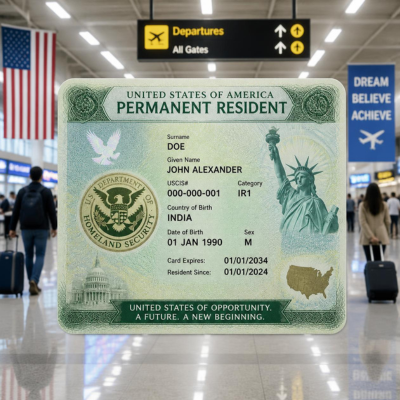
If you’re a green card holder planning an extended trip abroad — for work, to care for a family member, for school, or any other reason that might keep you outside the U.S. for a while — you’ve probably come across the term “green card travel permit” in your research. What most people are actually referring to here is the reentry permit, a specific travel document issued by USCIS that protects your permanent resident status during longer absences from the country.
This guide walks through exactly what a reentry permit does, when you actually need one, how the application process works, and the common mistakes that trip people up.
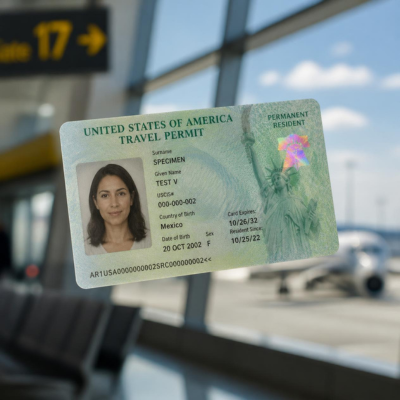
A green card travel permit, more formally known as a reentry permit, is a document issued by USCIS on Form I-131 that allows lawful permanent residents and conditional permanent residents to stay outside the U.S. for up to two years without being presumed to have abandoned their permanent resident status.
It’s generally required if you plan to be abroad for a year or longer, and it’s often recommended for trips between six months and a year, even though it’s not strictly mandatory in that middle range.
Importantly, you must apply for it while physically present in the United States — it cannot be requested from abroad — and while it protects you from an automatic abandonment finding based purely on how long you were gone, it does not guarantee entry, since CBP officers still make that determination at the port of entry.
What a Reentry Permit Actually Does
Your green card (Form I-551) works fine as a travel document for shorter trips, but it starts to lose its practical effectiveness the longer you’re away. If you’re outside the U.S. for a year or more without a reentry permit, your green card is generally no longer considered valid for reentry on its own, and you can be presumed to have abandoned your permanent resident status.
A valid reentry permit changes this. If you hold one, USCIS and CBP will not consider you to have abandoned your status solely because of how long you were outside the country, as long as you return within the permit’s validity period. It also lets you apply for admission to the U.S. directly, without needing to first obtain a Returning Resident (SB-1) visa from a U.S. embassy or consulate abroad, which is a considerably more involved process.
It’s worth being clear about what the permit doesn’t do, though. It doesn’t guarantee entry you’re still subject to standard immigration inspection at the port of entry, and a CBP officer can still ask questions about your ties to the U.S. and your intent to maintain residency. It also doesn’t pause or preserve the continuous residence clock required for naturalization; an absence of a year or more will generally still break continuous residence for citizenship purposes, even with a valid reentry permit in hand, which is a common point of confusion.
When You Actually Need One
The general guidance breaks down fairly cleanly by trip length:
Under six months. A reentry permit generally isn’t necessary. Your green card should be sufficient for reentry, though it’s still smart to maintain clear, demonstrable ties to the U.S. — a home, a job, family connections, ongoing tax filings — in case you’re questioned at the border.
Six months to one year. Not strictly required, but often recommended, especially if you anticipate any scrutiny about your intent to maintain residency, or if you have a pattern of frequent or lengthy trips abroad that could raise questions cumulatively.
One year or more. This is where a reentry permit becomes essential. Without one, an absence of a year or more puts your green card’s validity for reentry seriously in question, and you risk needing to go through the SB-1 returning resident visa process instead, which requires an interview at a U.S. embassy or consulate and can take considerable time to arrange.
More than two years, or no permit obtained before leaving. At this point, a reentry permit generally isn’t an option anymore. You’ll need to apply for an SB-1 Returning Resident visa instead, which requires demonstrating that your extended stay abroad was caused by circumstances beyond your control.
Eligibility Requirements
To apply for a reentry permit, you need to meet a few core requirements:
- You must hold a valid green card, whether as a permanent resident or conditional permanent resident
- You must be physically present in the United States at the time you file Form I-131 — this cannot be filed from abroad
- You must complete a biometrics appointment (fingerprints and photo), which also must take place while you’re in the U.S., unless USCIS indicates it can reuse biometrics already on file
- You need to be able to show a genuine intent to maintain your U.S. permanent residency, rather than treating the trip as a step toward relocating elsewhere permanently
Both standard permanent residents and conditional permanent residents (those on a two-year, marriage-based green card) are eligible to apply, though conditional residents face a shorter permit validity window, explained below.
How Long Is a Reentry Permit Valid?
For standard permanent residents, a reentry permit is generally valid for two years from the date it’s issued. For conditional permanent residents, the permit is valid for two years from issuance, or until the date you’re required to file Form I-751 to remove the conditions on your residency, whichever comes first. This shorter effective window for conditional residents is easy to overlook when planning an extended trip, so it’s worth factoring in carefully if this applies to you.
How to Apply: Step by Step
File Form I-131. This is the same multi-purpose application used for several different travel documents, so it’s important to check the correct box under the reentry permit section specifically. Selecting the wrong document type can significantly delay processing.
Pay the filing fee. As of 2026, the total cost is $660, made up of a $575 application fee plus an $85 biometrics fee. Payment needs to be made in U.S. dollars from a U.S. bank account; USCIS does not accept international wire transfers or foreign currency checks.
Submit supporting evidence. This typically includes a copy of your green card, evidence explaining the purpose of your extended travel, and documentation supporting your ongoing ties to the U.S., such as proof of employment, property, or family connections.
Attend your biometrics appointment. After filing, USCIS will schedule a biometrics appointment at a local Application Support Center. This must happen while you’re still in the United States.
Wait for a decision. Once you’ve completed your biometrics appointment, and assuming your application is otherwise complete, you’re generally permitted to travel abroad while your application remains pending. If approved, USCIS will mail the physical reentry permit to a U.S. address, though you can designate someone to receive it on your behalf if you’ve already departed. In some cases, you can request that the permit be sent to a U.S. embassy, consulate, or USCIS office abroad for pickup instead.
Traveling While Your Application Is Pending
One detail that surprises a lot of applicants: you don’t have to wait in the U.S. until your reentry permit is approved before you leave. As long as you’ve filed Form I-131 and completed your biometrics appointment while physically present in the country, you can generally travel abroad while the application is still processing.
If you need to return to the U.S. before the physical permit has arrived, carry your valid green card, your passport, and any USCIS receipt or biometrics notices you’ve received. These documents don’t guarantee admission on their own, but they can help explain your situation to a CBP officer at the port of entry.
How Long Does Processing Take?
Processing times for reentry permits have varied and can run anywhere from several months to well over a year, depending on current USCIS workload and where your application is being processed. Given this range, it’s strongly advisable to apply well in advance of your planned departure — commonly recommended timelines suggest starting the process at least 60 to 90 days before you leave, though given recent processing patterns, earlier is generally better if your travel plans allow for it.
What Happens If You Don’t Get One in Time
If you leave the U.S. for an extended trip without a reentry permit and end up abroad for a year or more, you’re not automatically barred from returning, but the process becomes considerably more complicated. You’ll typically need to apply for a Returning Resident (SB-1) visa at the nearest U.S. embassy or consulate, which requires demonstrating that your prolonged absence was due to circumstances genuinely beyond your control, along with a formal interview. This process takes real advance planning — embassies generally recommend starting the process at least three months before you intend to travel — and approval isn’t guaranteed the way returning with a valid reentry permit generally is.
Practical Tips
- Apply well before your departure date, ideally several months ahead, given how unpredictable current processing times can be.
- Be honest and specific about your reason for extended travel on the application, since vague or inconsistent explanations can raise red flags.
- Gather strong documentation of your U.S. ties before you file, including proof of employment, property ownership, tax filings, or family connections.
- Track your permit’s expiration date carefully, especially if you’re a conditional resident, since your permit’s validity may be shorter than the standard two years.
- Remember that a reentry permit doesn’t preserve your naturalization timeline. If you’re working toward citizenship, an absence of a year or more can still disrupt your continuous residence requirement even with a valid permit.
- Keep both your green card and reentry permit with you while traveling, along with your foreign passport, since some countries require a valid passport for entry even if the U.S. itself doesn’t.
- If your reentry permit is lost, stolen, or destroyed while you’re abroad, you may need to file Form I-131A for carrier documentation to be allowed to board a flight back to the U.S.
The Bottom Line
A green card travel permit, or reentry permit, is one of the most important tools available to lawful permanent residents planning extended time abroad. It won’t guarantee your entry back into the U.S., and it doesn’t stop the clock on naturalization requirements, but it does protect you from having your absence alone treated as abandonment of your status, and it saves you from the more complicated SB-1 returning resident visa process.
If you know a trip abroad is likely to stretch past six months, and especially past a full year, applying for a reentry permit well ahead of time is one of the simplest ways to protect your green card status while you’re away.
Frequently Asked Questions
What is a green card travel permit called officially?
It’s officially known as a reentry permit, applied for using Form I-131, Application for Travel Document. It’s a different document from your green card itself, though the two work together to protect your ability to reenter the U.S. after extended travel.
Do I need a reentry permit for a trip shorter than six months?
Generally, no. For trips under six months, your valid green card is typically sufficient for reentry, though it’s still wise to maintain clear evidence of your ongoing ties to the United States.
Can I apply for a reentry permit from outside the United States?
No. You must be physically present in the U.S. when you file Form I-131 and when you complete your required biometrics appointment. This cannot be done from abroad.
How much does a reentry permit cost in 2026?
The current filing fee is $660 total, consisting of a $575 application fee and an $85 biometrics fee, payable in U.S. dollars from a U.S. bank account.
How long is a reentry permit valid?
For standard permanent residents, it’s valid for two years from the date of issuance. For conditional permanent residents, it’s valid for two years or until the date they must file Form I-751 to remove conditions on their residency, whichever comes first.
Can I leave the U.S. while my reentry permit application is still pending?
Yes, generally. As long as you’ve filed the application and completed your biometrics appointment while in the U.S., you can typically travel abroad while the application processes, carrying your green card, passport, and USCIS receipt notices in the meantime.
What happens if I stay abroad longer than two years, even with a reentry permit?
If you remain outside the U.S. longer than your reentry permit’s validity period, the permit will have expired, and you’ll generally need to apply for a Returning Resident (SB-1) visa at a U.S. embassy or consulate instead, which requires demonstrating that your extended absence was due to circumstances beyond your control.