
Cataract surgery is one of the most common procedures performed today, and for most people, it’s remarkably quick and low-risk. Still, if you’ve got a trip on the calendar — a family visit, a long-planned vacation, or even a flight home after having the surgery done away from your usual city — it’s completely natural to wonder how soon you can safely get back on the road or in the air.
The good news is that cataract surgery recovery is generally much faster than people expect, and for most patients, travel doesn’t have to wait very long at all. That said, “soon” doesn’t mean “immediately,” and there are a few important details worth understanding before you book that flight or start packing your bags.
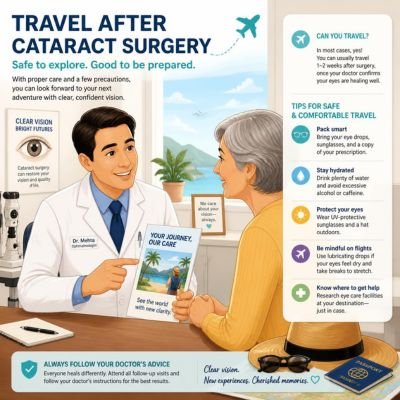
For most patients, local travel car rides, short outings, errands — is fine within a day or two of surgery, as long as someone else is driving at first. Air travel is typically considered safe as early as 24 hours after the procedure, since cabin pressure and altitude don’t pose any real risk to a healed cataract incision.
However, most eye surgeons still prefer that patients stick around for their first follow-up appointment, usually scheduled the day after surgery, before heading out of town. For longer trips or travel further from home, many surgeons recommend waiting until after the one-week follow-up visit, just to confirm everything is healing as expected.

Why Cataract Surgery Recovery Is Different From Other Surgeries
Unlike many other procedures, cataract surgery doesn’t come with the kind of physical restrictions that make travel genuinely risky. The surgery itself is minimally invasive — a tiny incision is made in the eye, the clouded natural lens is removed, and a new artificial lens, known as an intraocular lens (IOL), is put in its place. There’s no major tissue trauma, no lengthy hospital stay, and no internal healing process comparable to something like joint or spinal surgery.
Because of this, air travel itself isn’t considered a threat to your recovery. Cabin pressure and altitude have no meaningful effect on the eye or the newly placed lens. This is very different from certain other types of eye surgery — for example, procedures involving a gas bubble in the eye, where changes in air pressure can actually cause serious complications. Cataract surgery doesn’t carry that same risk, which is part of why surgeons are generally comfortable clearing patients to fly within a day of the procedure.
That said, “safe to fly” and “ideal timing for your recovery” aren’t always the same thing, which is where a bit of nuance comes in.
What Actually Slows Down Travel Plans After Cataract Surgery
If flying itself isn’t risky, what’s the real reason surgeons ask patients to hold off, even briefly? It usually comes down to two things: follow-up care and eye comfort.
Follow-up appointments matter more than people expect. Most ophthalmologists want to examine your eye the day after surgery to confirm healing is progressing normally and to catch early signs of complications, such as infection or unexpected inflammation, while they’re still easy to treat. A second appointment typically follows about one to two weeks later. If you’re traveling internationally or to a remote destination, missing these appointments — or not having quick access to an ophthalmologist if something feels off — is the real concern, not the act of traveling itself.
Your eyes may still be adjusting. In the first day or two, it’s common to experience light sensitivity, mild blurriness, or a gritty, irritated feeling in the treated eye. None of this is dangerous, but it can make travel — particularly a long, tiring travel day — less comfortable than it would otherwise be. Some patients feel completely normal within 24 hours; others need closer to a week before their vision feels stable and clear.
Dry cabin air can be irritating. Airplane cabins have very low humidity, often under 10%, and this can dry out the eyes more than usual. For an eye that’s still healing, this dryness can heighten discomfort, though it isn’t harmful. Packing lubricating eye drops for the flight solves this issue for most travelers.
Environmental exposure is a small but real factor. Airports, planes, and unfamiliar environments naturally expose you to more dust, allergens, and general germs than staying home does. Since the eye has a small, healing incision in the first few days, avoiding unnecessary rubbing and keeping the area clean matters more during this window.

A Practical Timeline for Travel After Cataract Surgery
Day 0 (Surgery Day)
You won’t be able to drive yourself home, since the numbing drops and mild sedation used during surgery temporarily affect vision and reflexes. Plan for someone to accompany you and drive you home. This is also not the time for any travel beyond getting home and resting.
Day 1
Most patients attend their first follow-up appointment on this day. Once your surgeon confirms everything looks good, short local travel — driving yourself (if you feel comfortable and your vision has stabilized), running errands, or taking a short trip nearby — is generally fine. This is also typically when flying becomes medically acceptable, assuming no complications were noted at your check-up.
Days 2 to 7
This first week is when most of the noticeable healing happens. Light sensitivity and blurriness usually improve steadily, though everyone’s timeline is a little different. If your travel plans allow it, many surgeons prefer you wait until after your one-week follow-up appointment before heading out of town, particularly for longer trips, simply so they can confirm your eye is healing as expected.
Weeks 2 to 6
By this stage, most patients feel back to normal for daily activities, including longer travel. Vision continues to sharpen and stabilize during this period, and any lingering dryness or light sensitivity typically resolves. If you had surgery on only one eye and are waiting to have the second done, your surgeon can advise on timing if you have travel planned between procedures.
Weeks 6 to 8 and Beyond
Full visual stabilization can take anywhere from six to eight weeks, and in some cases longer, especially for patients with denser cataracts before surgery or other underlying eye conditions. This is also usually the point at which your surgeon will consider updating your eyeglass prescription, since getting new lenses too early can mean an inaccurate prescription.

Tips for Traveling Comfortably After Cataract Surgery
Once you’ve been cleared to travel, a few simple habits can make the experience much easier on your healing eyes:
- Pack your prescribed eye drops and any protective eye shield. Keep them in your carry-on, not checked luggage, so you have access throughout your trip.
- Bring lubricating drops for the flight. Cabin air is dry, and artificial tears can prevent irritation from building up during longer flights.
- Wear sunglasses. Light sensitivity is common in the first several days, and quality sunglasses help outdoors and can also protect your eye from dust or wind.
- Avoid rubbing your eyes, no matter how tempting it feels, especially in the first week.
- Try to schedule around your follow-up appointments rather than skipping them. If travel is unavoidable, ask your surgeon whether a local ophthalmologist at your destination could see you if needed.
- Get travel insurance and check the fine print. Recent surgery is sometimes something insurers want disclosed, so it’s worth confirming your policy covers you appropriately.
- Avoid activities with sudden jolts or impacts for a few weeks, such as off-road driving, mountain biking, or anything with a real risk of a blow to the face or head, since a hard knock to the eye during early healing is best avoided.
When You Should Hold Off on Travel
While most people can travel very soon after cataract surgery, there are situations where waiting longer is the smarter choice:
- If your surgeon notices any signs of infection or unusual inflammation at your follow-up visit
- If you’re experiencing significant pain, rather than the usual mild discomfort
- If your vision is unusually blurry or worsening rather than improving
- If you have an underlying eye condition, such as glaucoma or diabetic retinopathy, that your surgeon feels needs closer monitoring before you travel far from home
If anything feels off, it’s always worth a quick call to your surgeon’s office before you leave. Most concerns turn out to be part of normal healing, but it’s better to check than to be far from care if something does need attention.
The Bottom Line
Cataract surgery is one of the few procedures where travel plans rarely need to be seriously disrupted. Local travel is typically fine within a day, flying is usually medically safe within 24 hours, and most surgeons are comfortable with longer trips once you’ve cleared your first one or two follow-up appointments — generally within the first one to two weeks. Full visual stability can take six to eight weeks or more, but that doesn’t mean you need to put your life, or your travel plans, on hold while you wait for it.
As with any medical recovery, your own surgeon’s guidance should always take priority over general timelines. They know your specific case, your healing progress, and any individual risk factors that might affect your recommended timeline.
Frequently Asked Questions
How soon can I fly after cataract surgery?
Most patients can fly as early as 24 hours after surgery, since cabin pressure and altitude don’t pose a risk to a healing cataract incision. Many surgeons prefer patients wait until after their first follow-up appointment, typically the day after surgery, before flying.
Can cataract surgery affect my travel insurance?
Cataract surgery usually doesn’t create restrictions with travel insurance, but policies vary. It’s worth checking your policy’s terms, since some insurers ask you to disclose recent surgery, and this could affect coverage or cost.
Is it safe to drive myself to the airport after cataract surgery?
Not on the day of surgery, since sedation and numbing drops used during the procedure temporarily affect vision and reaction time. Most patients can resume driving once their vision feels stable and clear, often within a day or two, but this should be confirmed with your surgeon.
Will flying dry out my eyes after cataract surgery?
Yes, airplane cabins have very low humidity, which can make a healing eye feel drier or more irritated than usual. Packing lubricating eye drops in your carry-on and using them regularly during the flight helps prevent discomfort.
How long until my vision is fully stable after cataract surgery?
Most patients notice significant improvement within the first week, but full visual stabilization can take six to eight weeks, and sometimes longer for those with denser cataracts or other eye conditions. This is also when your surgeon can safely update your eyeglass prescription if needed.
Should I skip my follow-up appointment if I have a trip planned?
It’s best not to. Follow-up visits, especially the one scheduled the day after surgery, help your surgeon catch early complications while they’re still easy to treat. If travel timing is tight, talk to your surgeon’s office about adjusting the appointment or arranging care with a local eye doctor at your destination.
Can I travel if I’ve only had one eye done and the other still has a cataract?
Yes, in most cases. Many patients travel comfortably between their first and second eye surgeries, though depth perception may feel slightly different if there’s a big difference in vision between the two eyes. Your surgeon can advise on timing based on your specific situation.
Just found this amazing slot site and I am loving the variety of games. The bonus offers are actually fair and withdrawals happen pretty quickly. It is a breath of fresh air compared to other casinos out there.